
It’s very difficult to formulate my thoughts on this one. While reading through the book again, I catalogued the questions I had that were still unanswered, but I couldn’t pin them down in a chronological order. I’d answer questions from the middle of the book, then the end, then the middle again, then the beginning, then back to the end… does that make sense? Certain questions I had could only be answered after I answered questions elsewhere in the narrative.
There are just a few unanswered questions I still have left, but I don’t think it’s detrimental to my overall theory. I guess I’ll start with the entire book itself.
What is this “note”, or story?
I believe this story is a work of fiction for the most part. It’s a different timeline, a story of what could have been if Jake had just given the girl his number, if Jake had continued to improve instead of declining. He wanted more than anything for that to be real, so he wrote about her and about him, the conversationalist that he could have been if he had less anxiety. Because “sometimes a thought is closer to… reality”. That being said, he could only run from reality for so long, and there are four key players in this story.
Jake
Near the end of the story the reader is told that Jake’s brother is actually Jake, and this gives us some insight into Jake’s history. He was “always… extremely solitary”, Jake says that they thought his “brother” was depressed, but he also admits to the main character that while sad, he isn’t depressed. This tells us that his suicide happened because he wasn’t in his right mind, not because of any overwhelming sadness. The important bit is this though: his brother “developed some problems” “a few years ago”. This wouldn’t be a few years from the present, since this fantasy seems to take place around the time that Jake met the girl at the bar. The “problems” would be his inner demons, or the dissociative identity disorder that could have come about at that time.
This relationship between Jake and his brother to me is the relationship between the person Jake was and the person he became as a result of these problems. Before these problems, despite the fact that he was solitary, Jake had a girlfriend in high school. He was by and large, not out of the ordinary. But these problems took over his life, as illustrated by Jake’s brother following him around and wearing his clothes. Jake didn’t want any of this change, but he lacked the proper help or resources to get better.
So the Jake we see is the ideal Jake, the Jake inside, high school Jake. This story preserves what he had lost in that way.
The Custodian
This one’s pretty easy, since the book spells it out. This is the present-day Jake. The real Jake, who in his free time writes about the life he could have had just to keep himself sane. Let’s take a little detour into his psyche, though.
Present day Jake works in a school despite having too much anxiety too interact with people. I think this shows that he doesn’t dislike being around people. Heck, he worked himself up to the point of being able to go out to a social event and even talk to a complete stranger. Even though he regressed dramatically, he still wanted to be around people, to not be alone. This is evident from the fact that in his story, he’s in a relationship.
There’s one line outside of the story that intrigued me. The custodian did not enter the boiler room and always asked someone else to clean it for him. At first glance there seems to be no explanation for it, but upon rereading the book it actually made me think of the basement in Jake’s parents’ house. It’s described as a dark room with a furnace in it, not too unlike a boiler room.
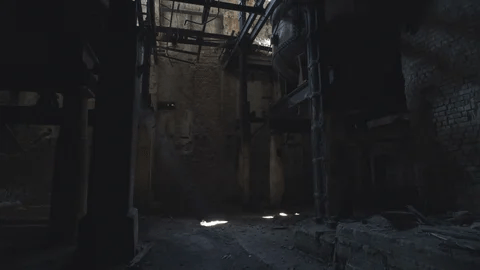
The basement is a place representing Jake’s mind, or psyche. There’s a non-functioning furnace in there and all of the lights are off, making it a dark and uncomfortable space. Not only that, but it can only be locked from the inside. This reminded me of how Jake mentions that you can never truly know what someone else is thinking. Thoughts can leave, sure, but whatever someone wants to be locked away, will stay locked away. It’s mentioned that Jake and his mom used to spend time down there together, painting. And the mother hears voices often, but she’s worryingly okay with it. Their time “painting” may be indicative of time spent trying to understand and come to terms with what could be another identity emerging in Jake, and that’s what I think the figure in the painting is. It has no specific gender, takes on different forms, but two things are clear: it takes place of the furnace, and it’s a horrifying creature.
As far as the old drawings go, I only have two theories. One, they represent different identities that have come and gone and their relationship with Jake. Or two, they represent the voices Jake’s mom has had in her head over the years and served as a template for Jake understanding his own mental illness. It could be either, but I’m leaning towards the second one since there’s no clear evidence of Jake having more than one identity besides himself. I know at the end of the book he refers to multiple characters as himself, but two of them are actually him, and the other is a complete fabrication made by him. I don’t think any of that is supposed to represent his multiple identities.
The obvious mystery, to me at least, is why the being takes place of the furnace in the first place. This was one of the more difficult questions to pin down but based on the premise that the basement is Jake’s mind, I’d hazard a guess that the being, or another identity, forever makes Jake’s mind a cold and uncomfortable space. Sure, the furnace is there, but it’s not being used. And presumably from Jake’s perception, it doesn’t even exist.
How much of this is real and how much is simply figurative, I don’t know. The farm seems to be the turning point from complete fiction to at least partially becoming reality.
The Girlfriend
Some would say the main character is another one of Jake’s personalities. I’m going to take a hard stance and say that isn’t true. Much like the fact that Jake is an idealistic version of the custodian, the main character is an idealistic version of the girl he met at the bar. She’s very real and not made up. Unfortunately, Jake either never learned or didn’t remember her name, leaving her to be called nothing for the entirety of the story. Is this the reason he chose to make her the main character? Possibly. I don’t wanna make a meta-analysis but seeing that this book is not only technically written by a real person (Iain Reid), but also written by a character in the story (custodian Jake), I think judgements based on writing choices is fair and not too far out there. Writing this story from Jake’s point of view would make it glaringly obvious that he didn’t know the girl’s name, and making up a name would kind of make her somebody else. Whether it was to preserve the fantasy that they were together for Jake, or to not clue the reader in on the nature of who the main character was for Reid, this story kind of had to be written from her point of view. There could be other reasons, sure, like Jake wanting to get inside of the head of someone else, something that’s conventionally impossible. But I think this point of view came out of necessity more than it did for some narrative reason.
That being said, the girl plays a larger role than just being part of the fantasy. First, she’s the only one in the story viewing events from a real-world lens. Oddities, idiosyncrasies, and strange behaviours don’t go unnoticed by her. Not only does she become a surrogate for the reader, but also proof that even though he wasn’t in his right mind, a part of Jake was painfully aware of everything wrong with his situation. Second, the girl is a proxy between the Caller and Jake.
The Caller
Our fourth key player. But not a person. The caller is one of two things: the physical representation of a suicidal urge building up inside of Jake, or the second identity in his mind: the figure in the painting. Initially I thought it was the former. The caller shows up physically, once. But his entire presence is only through phone calls and voicemails that haunt the main character. But after theorising about the figure in the painting, the latter makes sense. The caller was described as very tall. We never see his face and hands. And it asks the same question Jake was constantly avoiding: what are you waiting for?
Things start to make sense when the caller is viewed through this lens. The rational part of Jake, the girl, desperately tries to keep the caller a secret from him, pretending that it doesn’t exist, protecting the version of Jake that doesn’t have to deal with the caller. In the back of the custodian’s mind, he hears the caller and desperately tries to push it away and preserve the fantasy he has.
What does it all mean?
I’ve been poorly dancing around the crux of my theory, but I had to explain my thoughts on the key players first. In the end, I think it’s easiest to think of the girlfriend and the custodian as the “superego” and “id” to Jake. Or in normal people terms: the tiny angel and devil that sit on either shoulder. Now while these are portrayed as good and evil, they’re really just your impulse vs your standards. The person in the middle, the “ego”, is the result of these two being balanced. Jake’s “impulses”, or unfiltered desire, force him to be a recluse, anxious about interacting with people. At his core, it’s easy and preferable to talk to nobody. The custodian has the scales tipped towards the id. Jake’s “standards”, or aspirations, are about being in a relationship, being a conversationalist, working a normal job, all things of the social norm. Idealistically, it’d be great to be all of these things. The girlfriend has the scales tipped towards the superego. Past Jake is a balance of these two: capable of relationships, alright at small talk, worked a “normal” job for a period, yet solitary and anxious.
I’d like to make clear that I don’t think the characters are actually based on these psychological concepts, but they loosely fit the bill and it helps to explain their general roles.
So despite Jake’s better nature (the girl) trying to keep him in a good place by trying desperately to not go to the school and begging him to leave as soon as possible, he can’t. Reality draws him away from his fantasy, and his anger towards the person he had become sends him into the school at night. There’s nothing Jake’s rational thoughts can do at this point. The girl is completely helpless to prevent anything else. She literally falls apart as the standards Jake would want to live by and the norms he’d want to adhere to start decaying, overtaken by an environment that the Caller created. And that’s the other thing: when we finally see Jake again, he’s wearing a mask and the story explicitly states that the custodian is gone. This to me shows that the caller has finally taken over, and Jake is no longer in control. The girl is “sorry for everything”, because despite her best efforts, the outcome didn’t change. It was only delayed. Why does the girl stab herself instead of Jake/the Caller? I think because 1) the Caller isn’t really a person, and 2) it also represents the defeat of the part of Jake that was keeping him from killing himself.
What’s the point?
Interestingly, the dialogue outside of the story is pretty revealing. We see a number of people who saw and sometimes interacted with Jake on a daily basis yet did absolutely nothing to help him. He desperately needed help. Help that his mentally ill mother couldn’t provide. Help that was never offered to him despite all the strange behaviours people saw. Jake is just like those pigs that his parents fed every day but never checked on. Sure, they knew they were there and that they were eating the food, but the pigs just sitting there all day sluggish wasn’t enough to prompt a wellness check. And when they did, it was already too late for them. Jake had been festering on the inside for years. His anxiety was one thing, but his apparent dissociative identity disorder was an entirely other thing. He’d be aloof, sometimes unresponsive, wrote graffiti that he claims wasn’t his (likely the Caller’s), and yet nobody did anything about it. They just went about their day. The two people in the dialogue are right that this isn’t their fault, but it’s largely dismissive and shows that they didn’t really learn anything from the experience. Kind of like an “oops, oh well” situation.
It’s kind of crazy that such a lesson is buried deep within this book. Jake seemed to be quite literally fighting for his life on the inside, regretting the events that brought him to his current point in life and trying desperately to reclaim some semblance of normalcy and sanity through his writing. The book was his thoughts, his dreams, and his struggles. He probably constantly thought about the life he could have had, since “sometimes a thought is closer to truth, to reality, than an action.”
Sometimes.
 Pepperfaced