
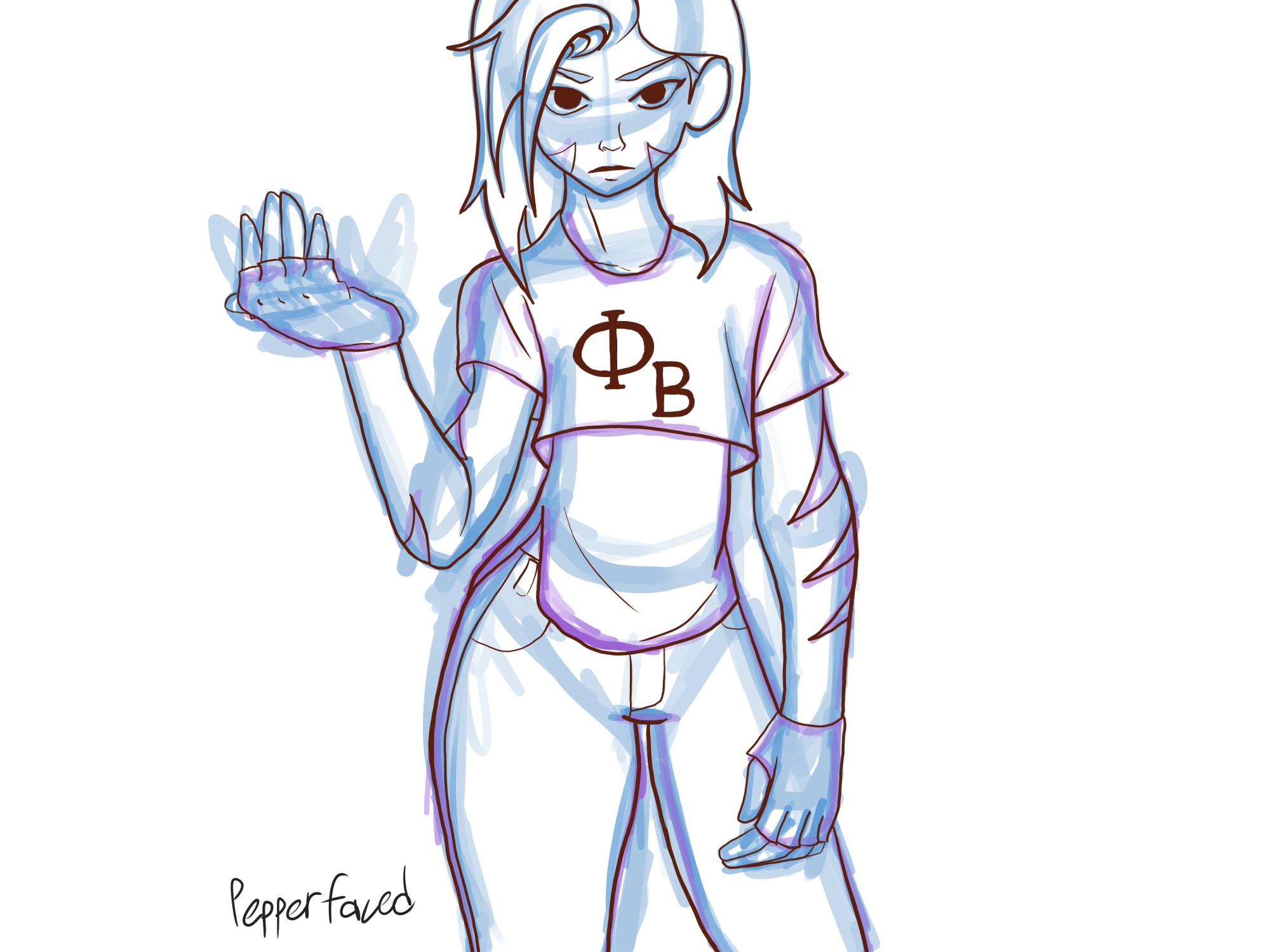
So I’m going to try something new. A step by step process of how I do my drawings. Which is more like each separate layer from the finished piece, but its basically a step by step process anyway. You might find it interesting, you might not care. Either way, here it is.

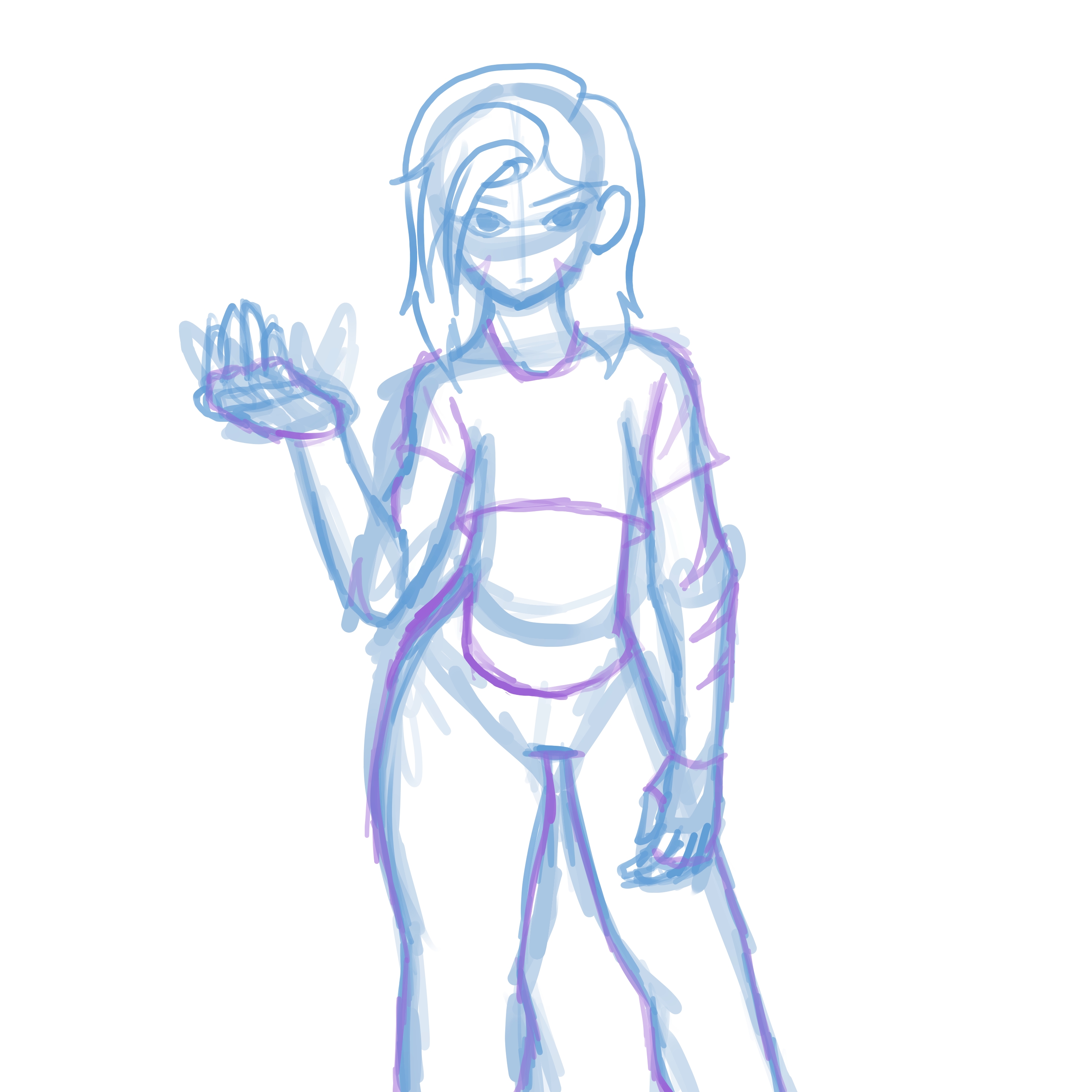
I started rough. VERY rough. I don’t normally do this but if you read my last post you know I was watching the KNKL Show while drawing this, and he often starts his drawings off very rough and cleans it up as he goes, so that’s what I did. I normally like to reference a photo when picking a pose to draw, and I find that you can find a lot more natural poses when you Google “women’s fashion” instead of “female poses”. I didn’t exactly copy the pose of the photo I used. I actually changed the hand positions and dramaticised the hip tilt to give Faraday a clearer reverse S curve.

Next I took a smaller brush and started drawing in some structure. Notice that I don’t try to match the underlying sketch exactly, but I just use it as a guide for the details.
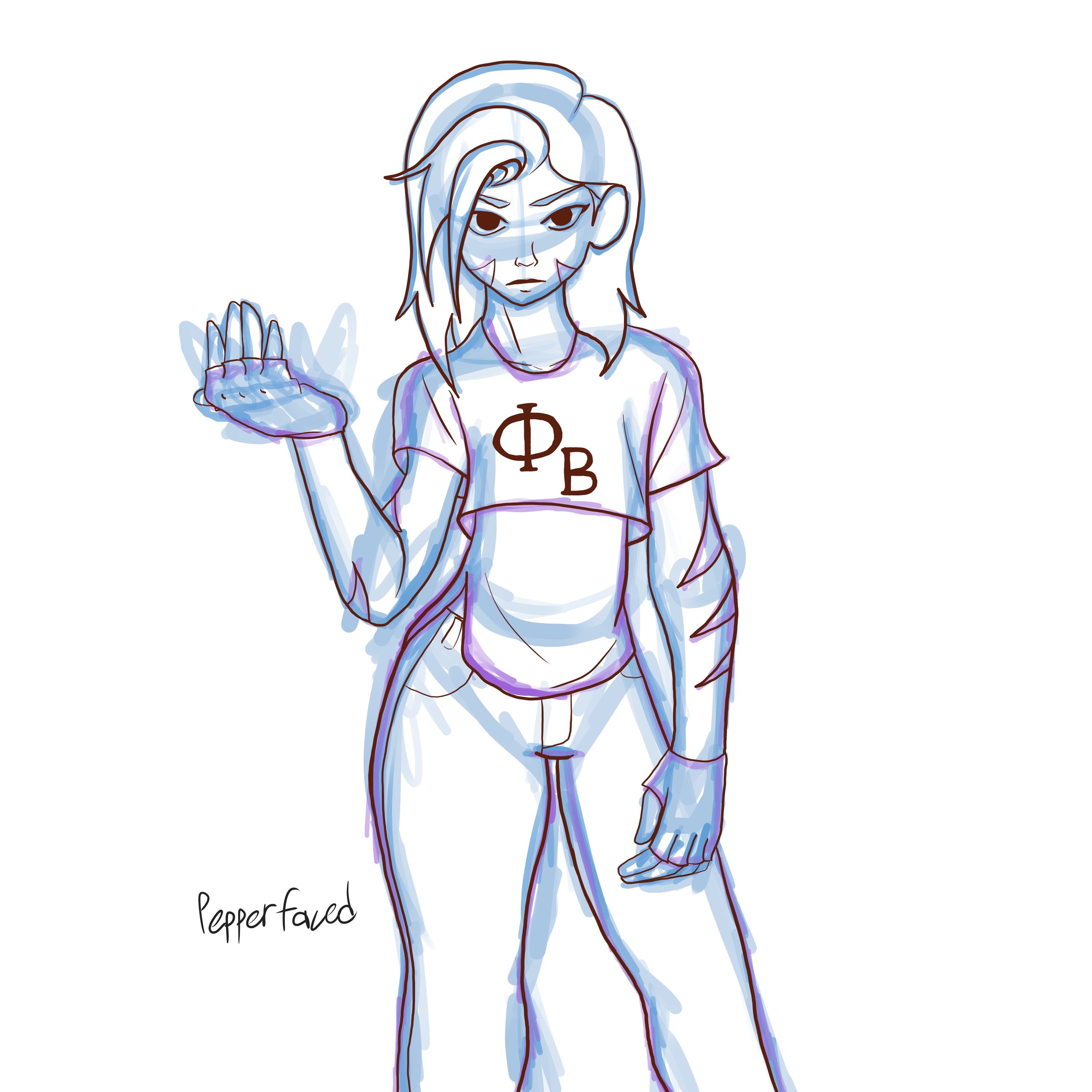
 On another layer with the same sized brush I start adding the clothes. Even though I consider these two layers to be on the same “step” in the process as far as detail goes, I want to be able to erase and change the clothes if I don’t like them without affecting the lowering layer. You might notice the tiger stripes are on this “clothing” layer. It was actually a decision I made while I was drawing this because of Kienan Lafferty. He was explaining 3 levels of interesting character design: Archetype, Trope, and Spin. Take for example Sonic the Hedgehog. His archetype is a hero. His trope, or his identifying characteristic, is that he’s a hedgehog. And the spin on his character is that he’s super fast. The point Kienan wanted to make is that these three things are all you need to make a character new, interesting, and stand out from others. And so I realised Faraday had the archetype: hero, the trope: brawler, but no spin. And so I decided to make her spin a tiger motif. Her design and personality would reflect that of a tiger. And just adding those tiger stripes suddenly made her a lot more interesting to look at, and gave her character a lot more depth (not that you would know). Now it’s not a game changing detail, but it crosses the line from plain to interesting.
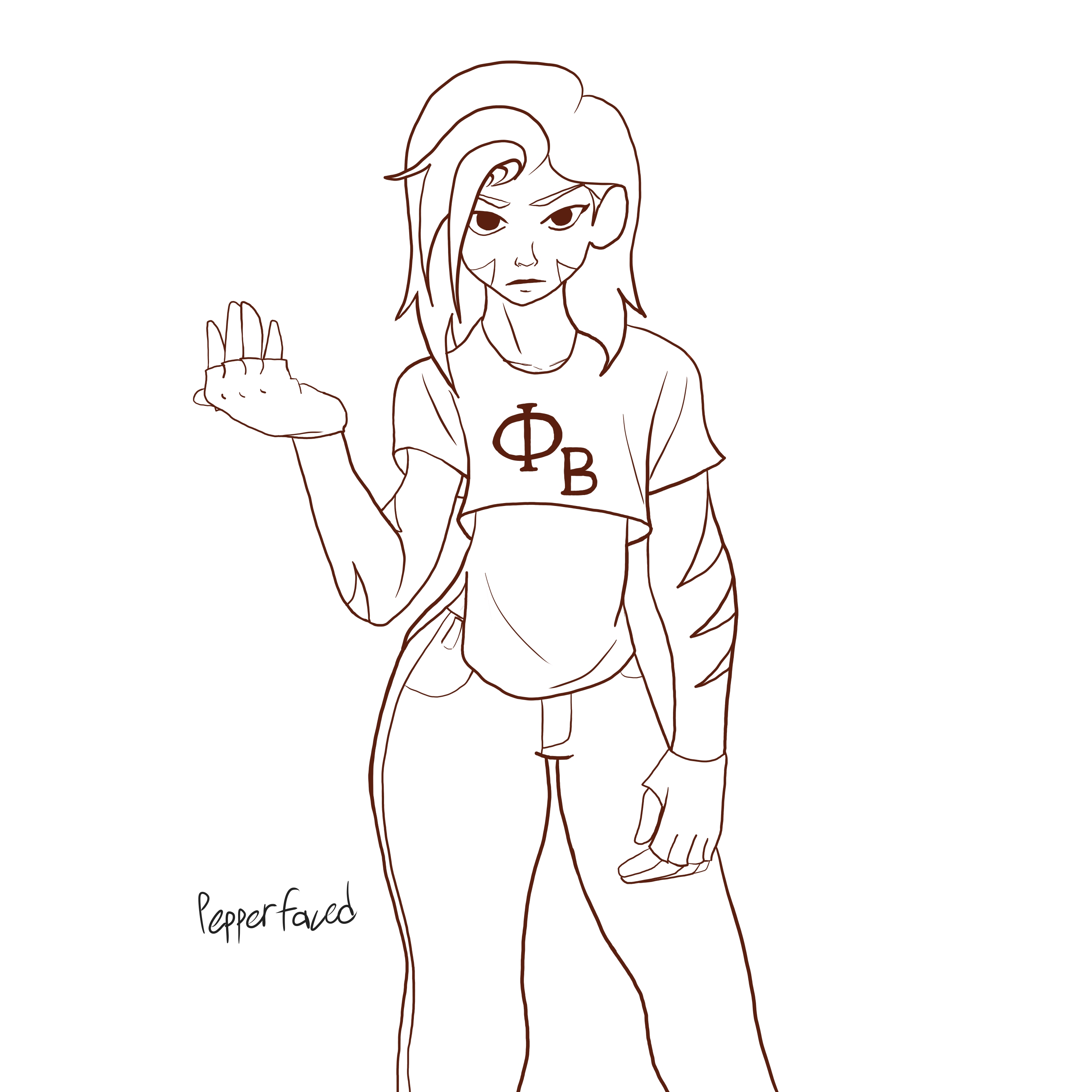
 I could have gone in and done another layer of detail but at this point I felt that I was ready for the final line work. So with my finest brush I put down all of the final lines, making sure to let the pressure sensitivity create differences in line weight that subtly make the drawing feel more dynamic.
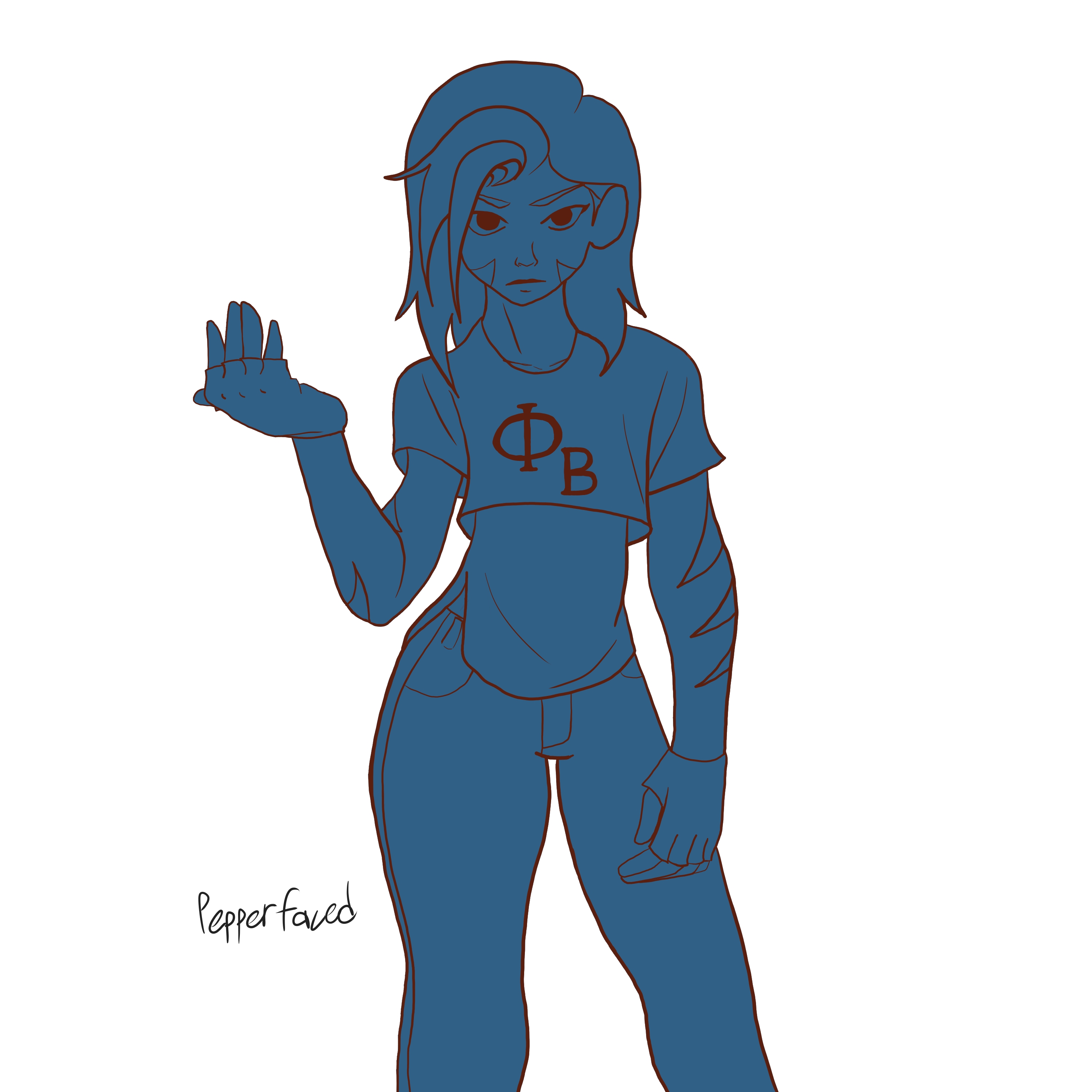
Next we get into the colouring stage. After making all of the sketch layers invisible I simply select the white space around the drawing, inverse the selection (Ctrl+Shift+I on Photoshop and FireAlpaca/MediBang Paint), then fill in it with your colour of choice. I recommend using a dark colour that isn’t going to be used in the final piece. After this I create a new layer and set it as a clipping layer (make sure its above the layer you just filled) and then I can start colouring without going outside the lines! For each part of the character I create a new clipping layer.
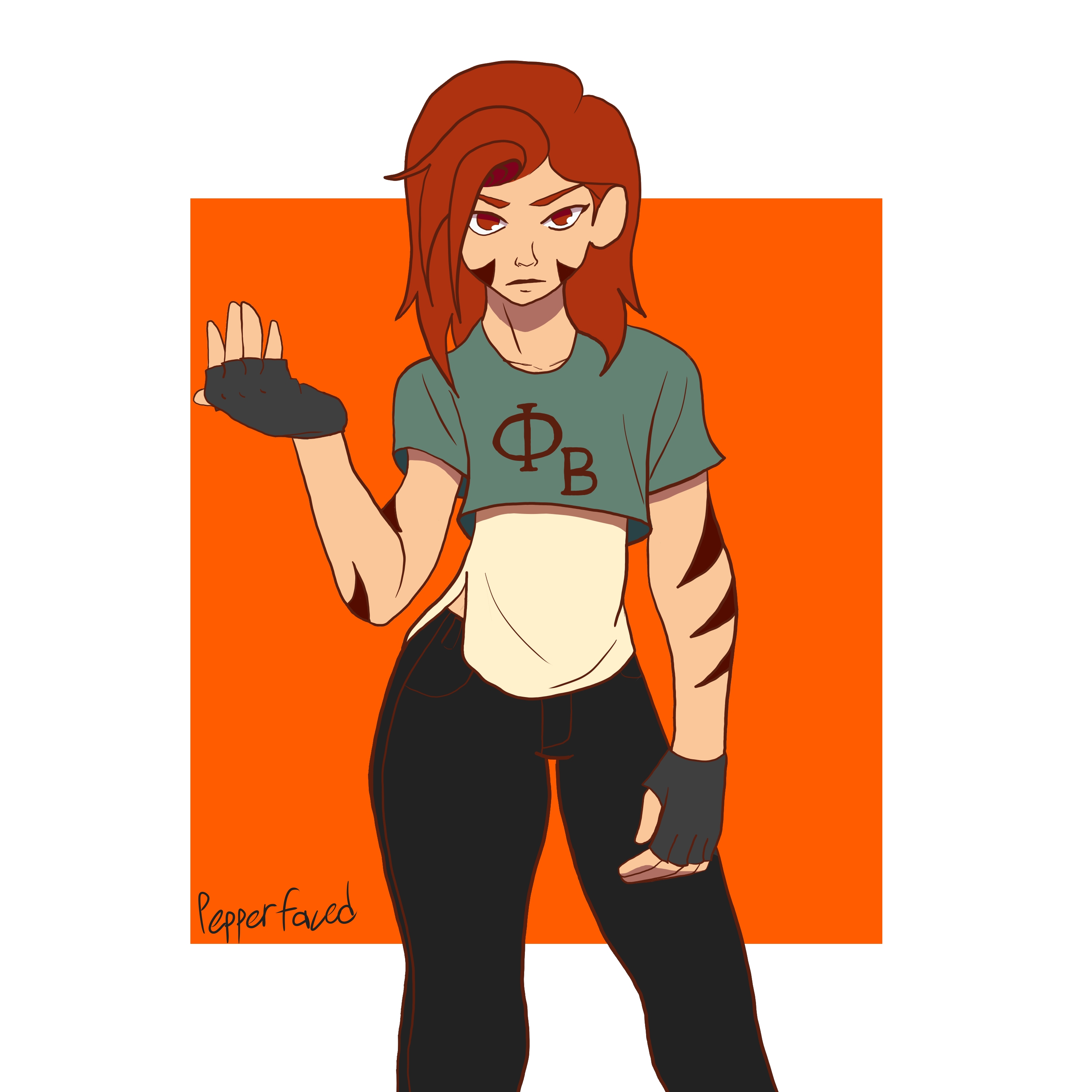
The last step is really just polishing. I make sure there are no holes in my colouring job and make sure I didn’t colour over any lines. Then I put in the shadows. I’ve been really into “cel shading” after watching Kienan Lafferty’s tutorial on it because it gives a really satisfying look. Basically, you take the original colour, hue shift it towards purple a bit, then make it darker and more saturated. I’ve also combined that with a minimalist style of shading that I picked up from Hong Soonsang (@hong_soonsang on Instagram). I basically learned that putting the shadow below the chin and in places where a shadow would be obvious is just enough to make it look complete. I probably should have put a shadow under her right hand but seeing something wrong with a finished piece is something that will always happen. After I was done I put a shape behind the character (per Kienan Lafferty’s advice lol) and called it a day.
It’s not perfect, but it’s something. My drawing process changes frequently, but I like to think I’m refining it to become better and more consistent. And if you made it this far, thanks for actually reading all this.
 Pepperfaced